

Chimney flashing repair in Oak Park, IL
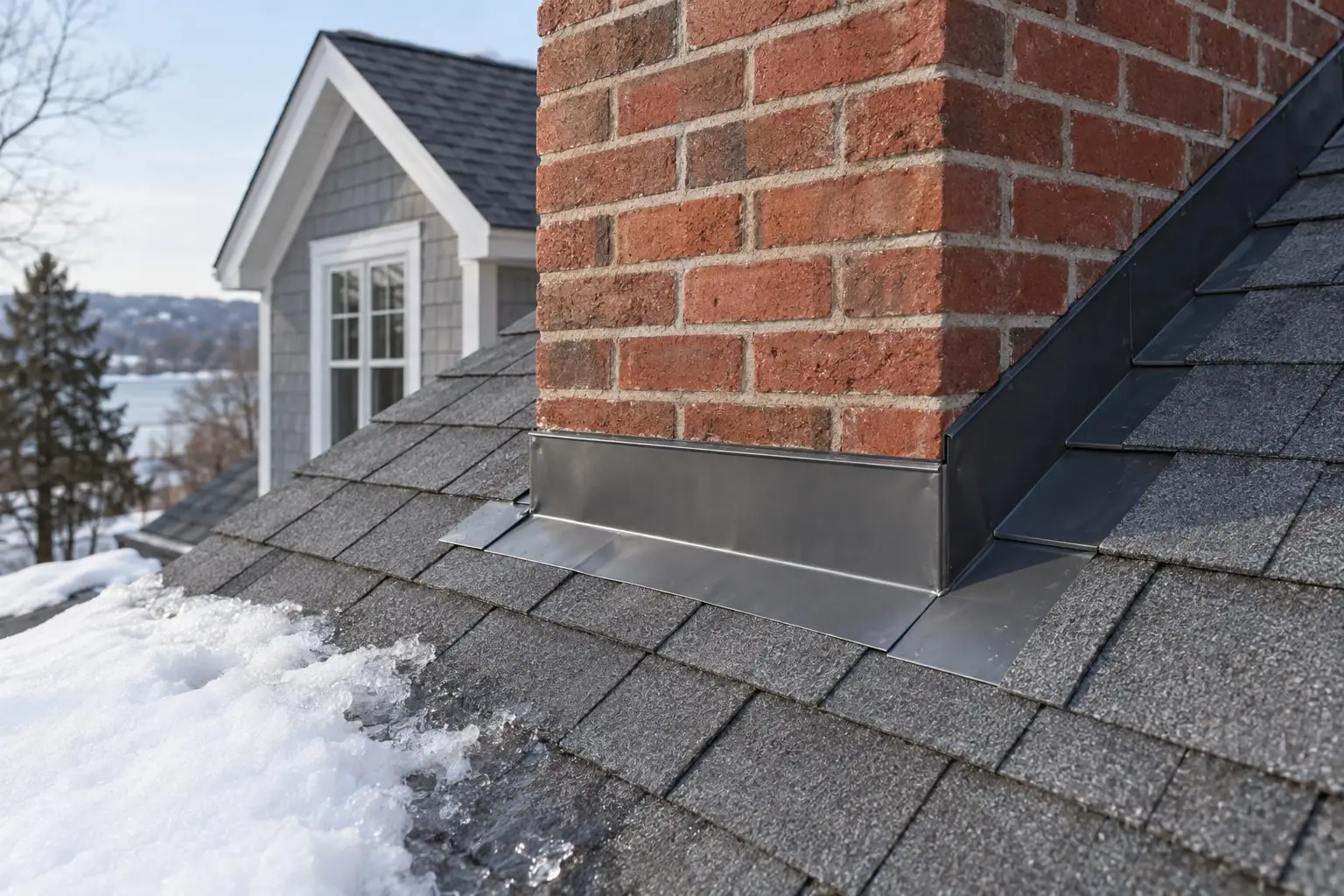
The seam where the chimney meets the roof is where water gets in first. We replace flashing that has lifted, rusted or been patched with sealant, and set it into the brick.
- Step flashing
- Counter-flashing
- Leaks at the roof line
Why the roof line leaks
Brick and shingles move differently with heat and cold, so the joint between them is always working. Flashing is the metal that covers it: pieces layered under the shingles and over each other, with a second band set into the mortar above to shed water from the brick.
Where that layering fails, water runs behind it into the attic and the ceiling. The signs are usually quiet at first.
- A damp patch on the ceiling or the wall next to the chimney
- Damp insulation or a musty smell in the attic
- Flashing that is rusted, bent or lifting away from the brick
- A thick line of old sealant used as a patch
- Shingles that are curling or missing around the chimney
- A leak that shows up in wind-driven rain
What you get with Chimney flashing repair
The leak stopped at the seam
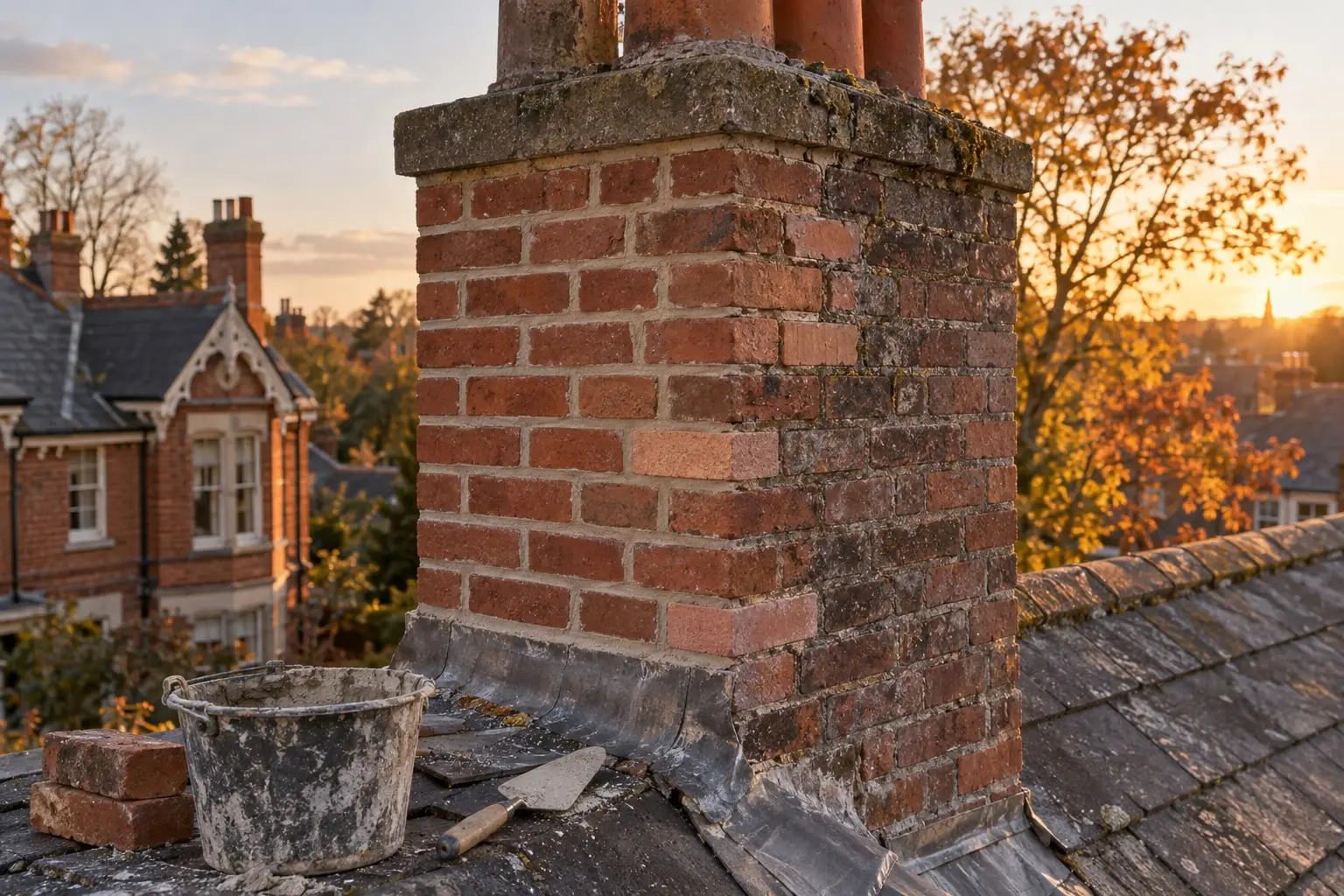
Metal that is layered correctly carries water down and out, rather than relying on a bead of sealant that dries and cracks.
A dry attic and ceiling
Keeping water at the roof line protects the insulation, the framing and the plaster below.
Set into the masonry
The upper band goes into the mortar joints, so the top edge of the flashing is covered by the brick.
The source confirmed
We check the flashing against the crown, the cap and the brick, so that the repair goes where the water enters.
What we repair
The details depend on the roof and the chimney, but most jobs are one of these.
- Step flashing along the sides of the chimney
- Counter-flashing set into the mortar joints
- Flashing at the back of a chimney, where water collects
- Sealant that has failed, replaced by proper metal
- Metal flashing that has rusted or pulled away
Why sealant alone does not last
A bead of roofing sealant is a quick patch and sometimes a temporary one. It dries out, shrinks and cracks as the chimney and the roof move, and then it leaks again. When we find flashing that has been repeatedly patched, we usually recommend replacing the metal and treating sealant as a finishing touch only.
Chimney flashing repair questions
How can I tell if the flashing is leaking?
A stain on the ceiling or wall by the chimney, damp insulation in the attic, or rust and gaps in the metal at the roof line. A leak that appears only in wind-driven rain is often flashing as well.
Can flashing be repaired without replacing it?
Sometimes, when the metal is sound and only a joint has opened. If it is rusted, bent or has been patched many times, replacing it gives a more lasting repair than adding another bead of sealant.
Is this a roofing job or a chimney job?
It is both, which is why leaks here get passed back and forth. We look at the flashing as part of the chimney, together with the crown and brick above it, and tell you what we find.
Can flashing be fixed in cold weather?
Metal work usually can be. Anything that needs mortar to cure, like setting counter-flashing into new joints, is planned for temperatures above freezing, and we will say when that applies.
Other services we provide
Chimney repair
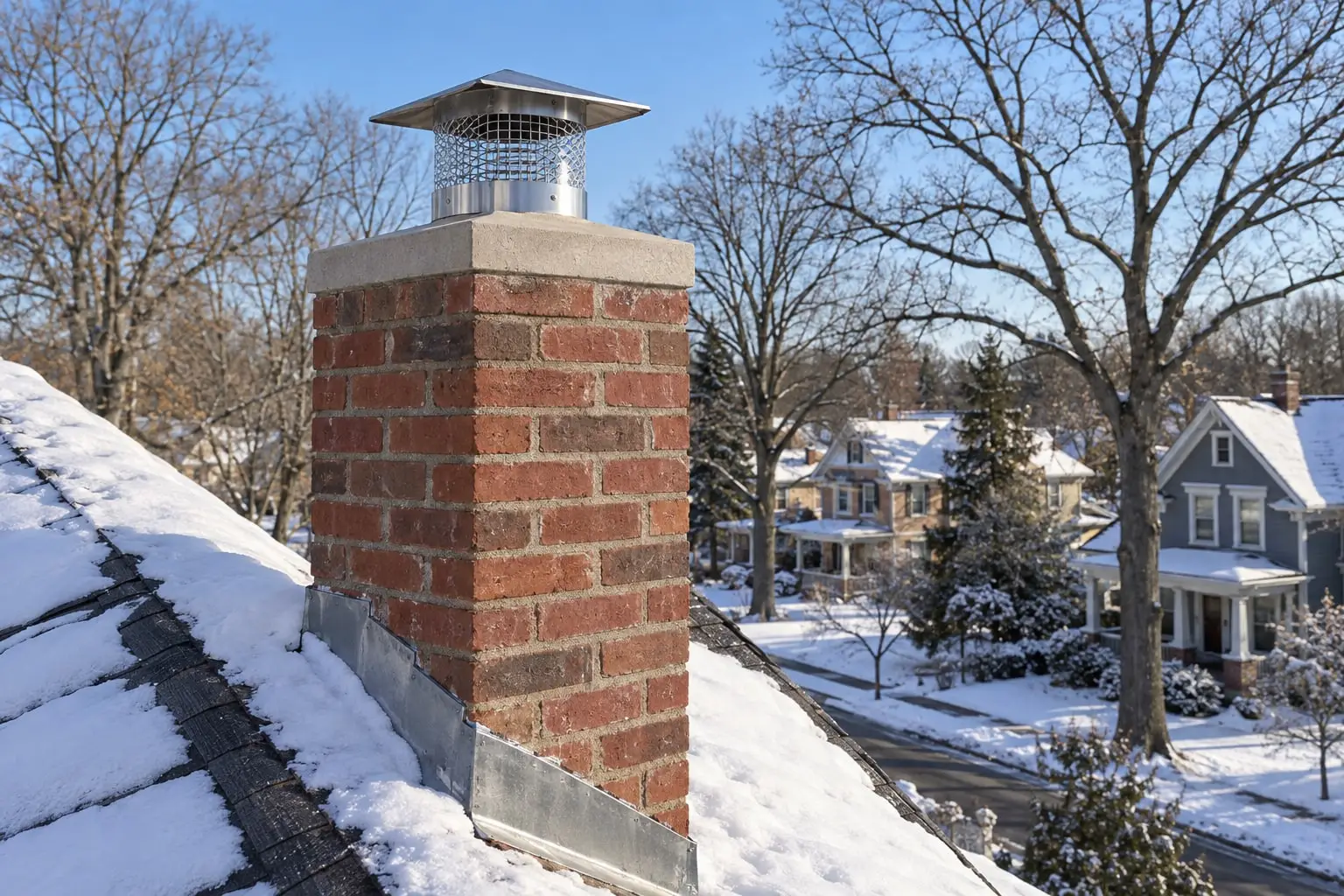
We repair caps, flue pipes, crowns, flashing and brick so that rain and frost cannot get into the chimney.
Chimney crown repair
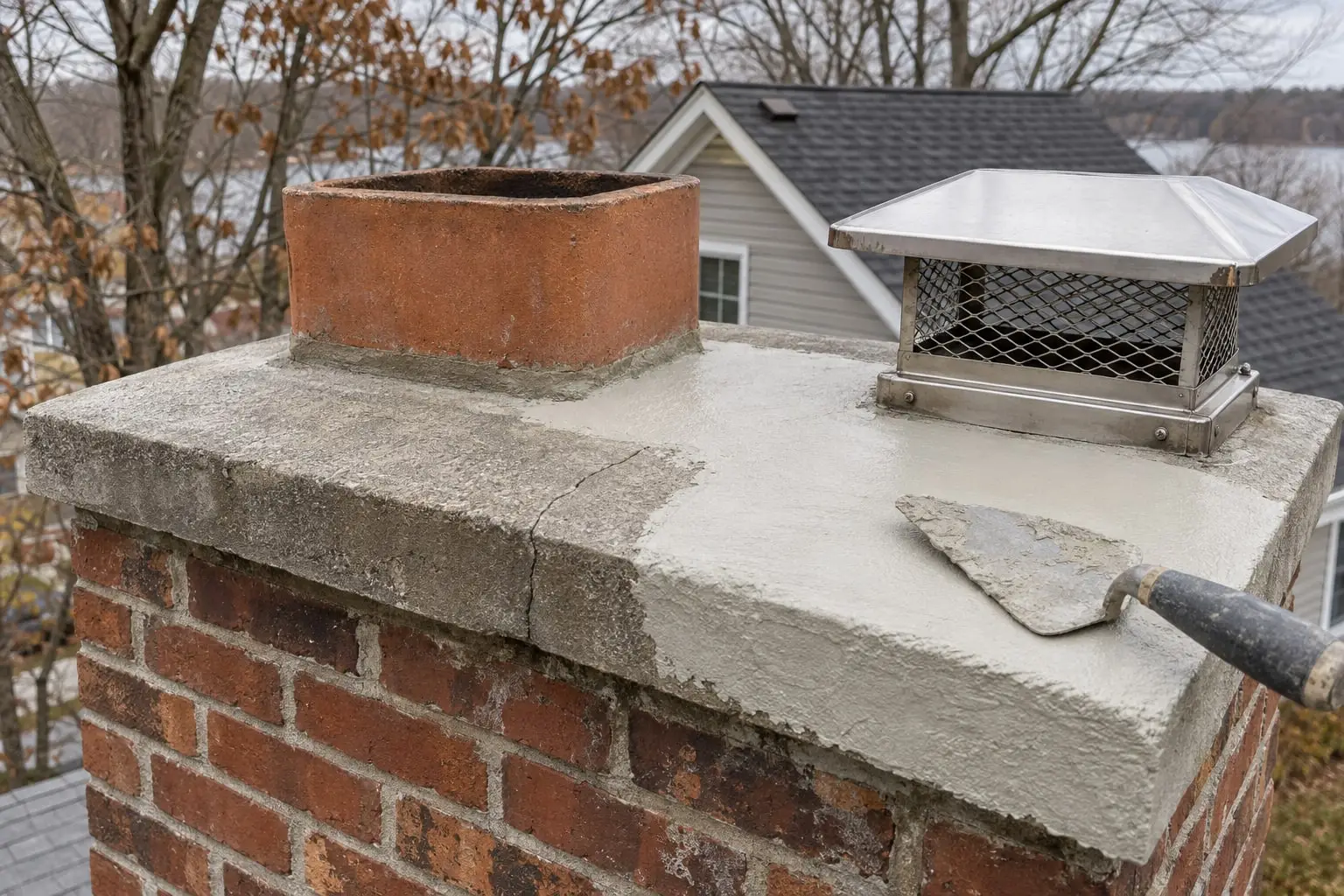
Cracked or crumbling crowns sealed, resurfaced or rebuilt so the brick below stays dry.
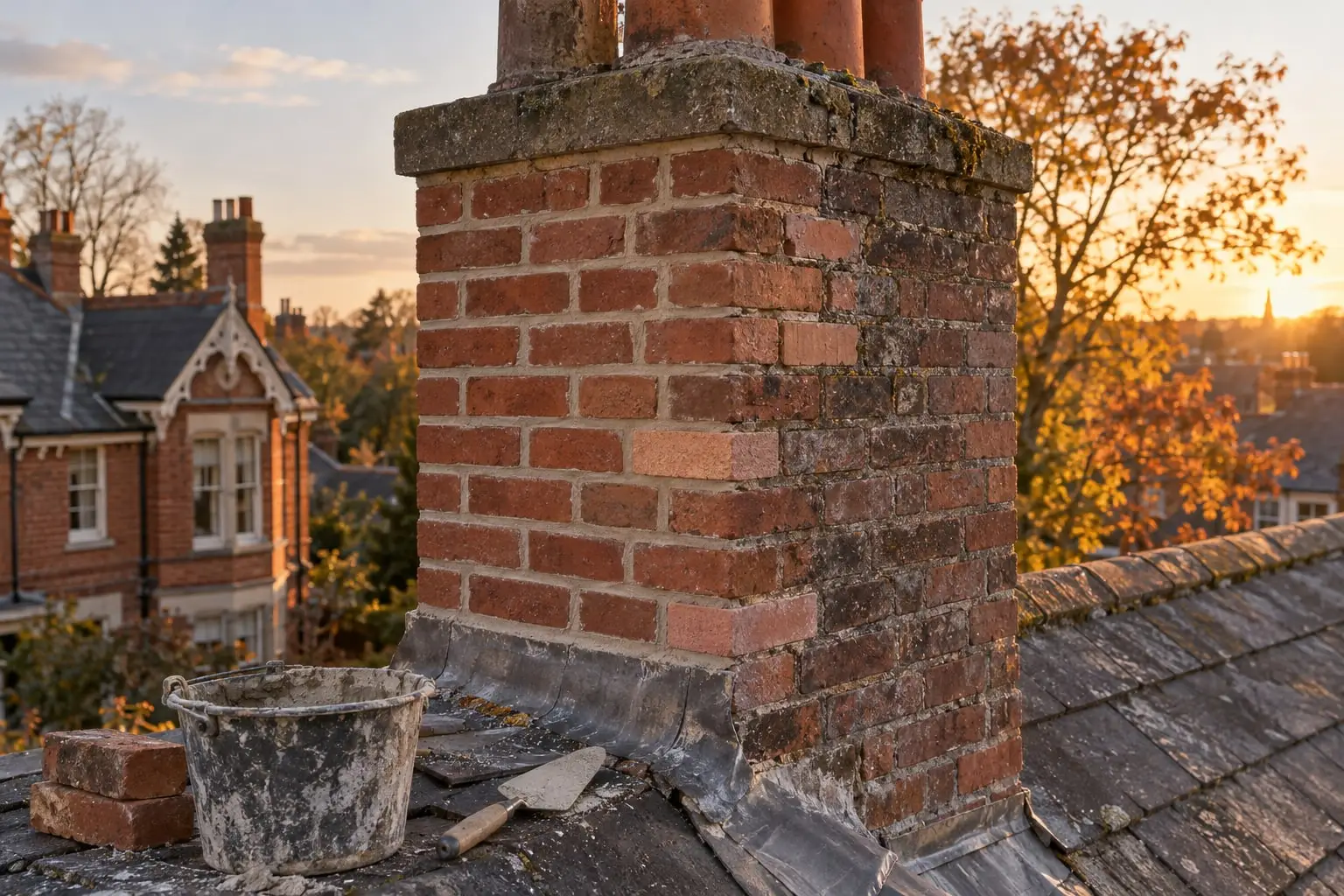
Masonry restoration
Open joints repointed, broken bricks replaced and loose courses rebuilt on older brick chimneys.
Ready to stop the leak at the roof line?
Fireplace, stove or insert? Tell us which, leave your number, and we call to book a visit.