

Chimney repair in Oak Park, IL
Water is what ruins a chimney. We find where it gets in, from the cap and crown to the flashing and the brick, and repair that part so the stack sheds weather again.
- Caps and flue pipes
- Crowns and flashing
- Brick and mortar joints
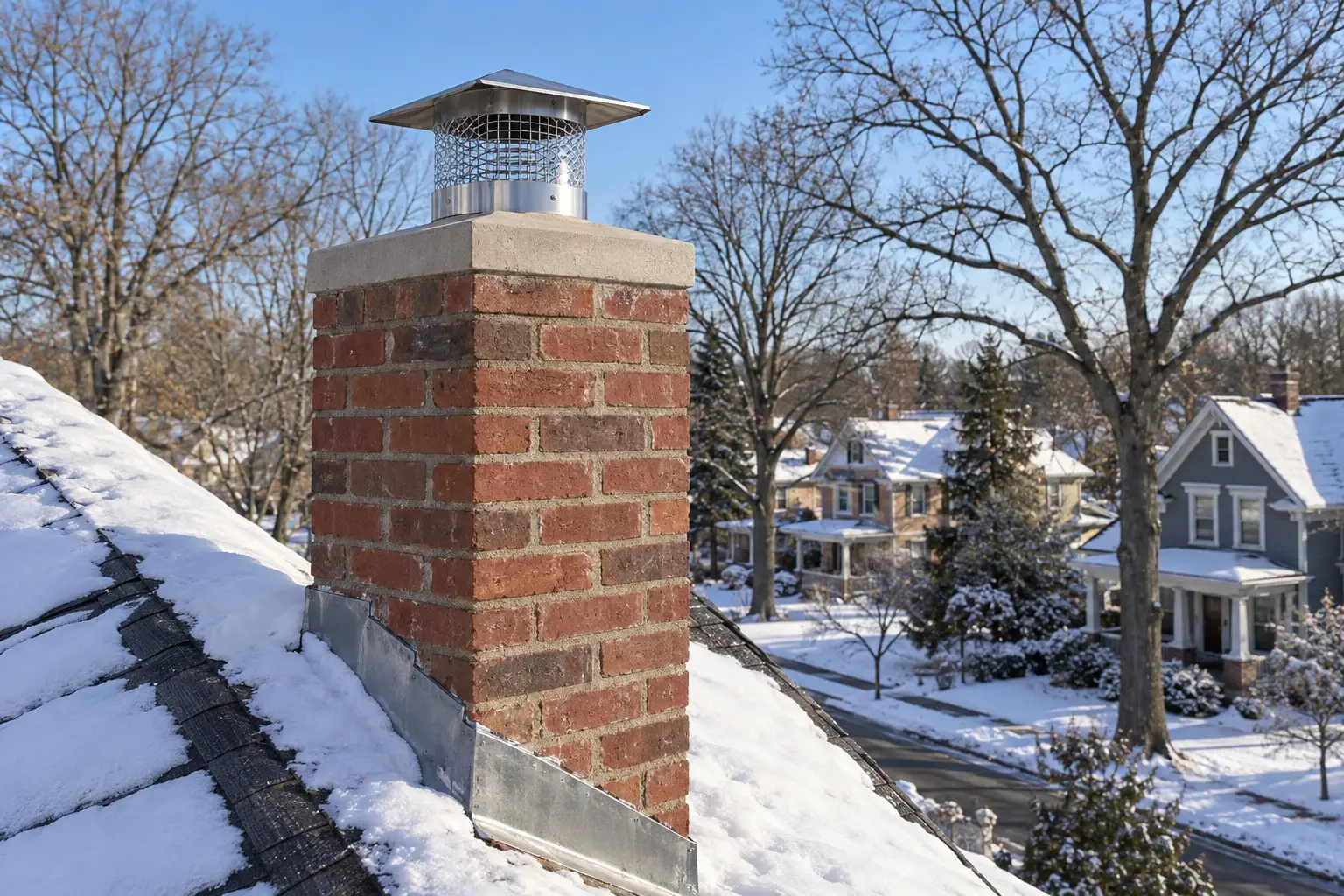
Where chimney damage starts
A chimney is the most exposed part of a house. It stands above the roof with wind, rain, snow and sun on every side, and in a Chicago-area winter its brick goes through many freeze and thaw cycles. Water that gets in expands as it freezes, and each cycle widens the gap a little.
The older masonry of Oak Park, with its tall stacks on steep roofs, has had a lot of those winters. These are the signs we are most often called about.
- A cap that is rusted, bent or missing
- A crown with cracks, or one that crumbles at the edges
- Flashing that has lifted or rusted at the roof line
- Mortar joints that are open or sandy
- Bricks with the face flaking off
- A damp patch on the ceiling or the wall next to the chimney
- Rust on the damper, or damp in the firebox after rain
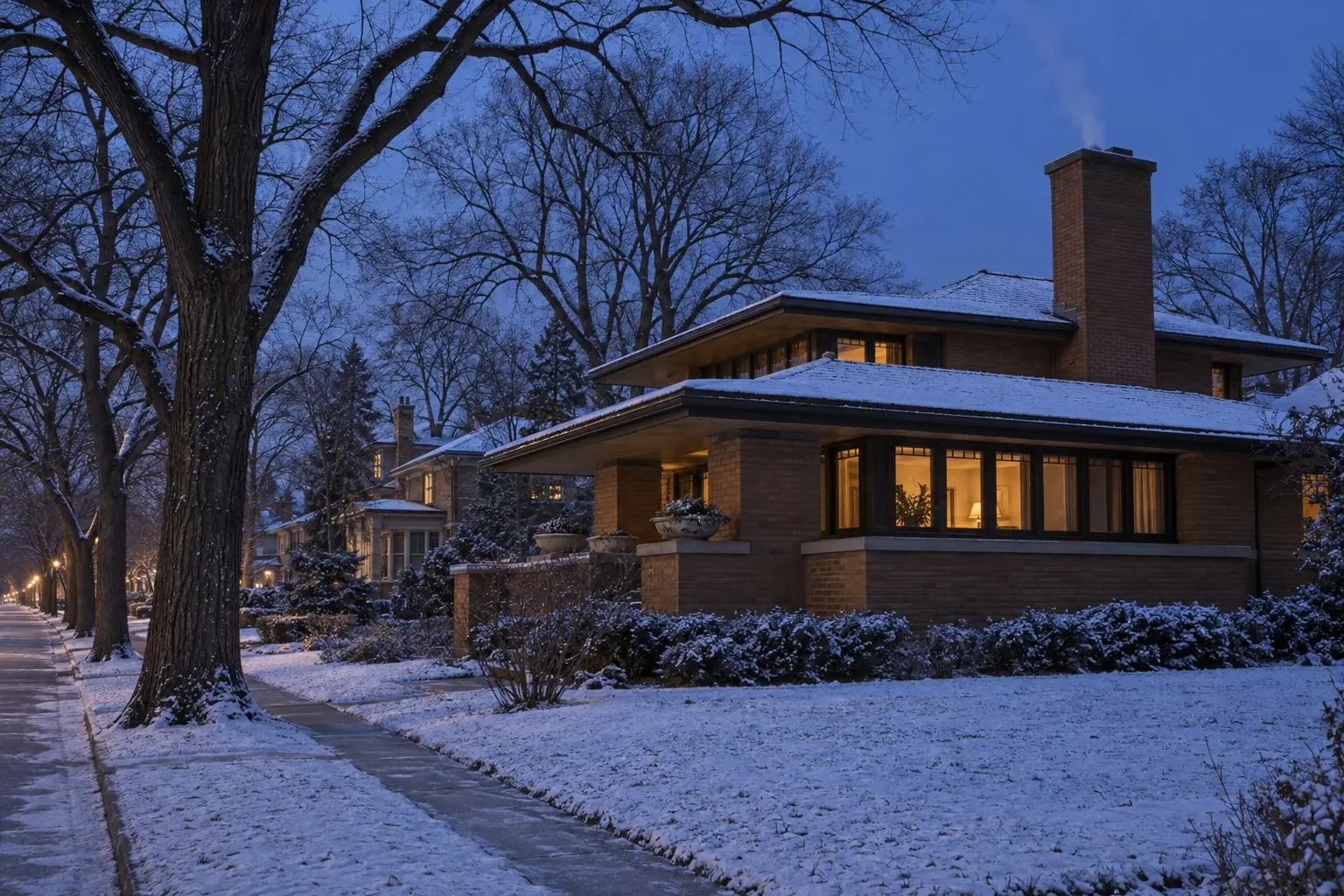
What you get with Chimney repair
Water stays out
A sound cap, crown and flashing send rain and snowmelt off the chimney instead of into the brick and the ceilings below.
Stainless where it counts
Caps and lids in stainless steel outlast painted steel ones, which tend to rust through within a few winters.
The cause, not only the stain
We trace a leak back to where the water enters, so the repair goes where the problem is.
Fixed while it is small
A small repair this season usually saves a bigger masonry job after more winters of leaks.
Repairs we handle
Before any repair we look over the entire top of the chimney and the roofing around it, then match the work to what failed.
- Stainless steel caps and lids, sized to the flue
- Metal flue pipes, hoods and terminations
- Crown sealing, coating and rebuilding
- Flashing repair and new flashing at the roof line
- Repointing of open mortar joints
- Replacing broken or spalled bricks
Brick chimneys and metal ones
Not every chimney is brick. Some homes vent a stove, a furnace or a fireplace through a metal pipe, or through a prefabricated chimney boxed into a framed enclosure. These systems fail in different places: the top cap, the cover over the enclosure and the point where the pipe leaves the roof. Once any of them rusts or opens, rain follows the pipe down or soaks into the enclosure.
Chimney repair questions
When does a chimney cap need to be replaced?
Rust streaks, peeling paint, a dent, a tilt or a mesh with holes in it all mean the cap is done. If the cap is gone altogether, rain, leaves and animals have a clear way into the flue and it should be replaced soon.
Where does a chimney leak usually come from?
Most often from the top: a cracked crown, a missing or rusted cap, or flashing that has lifted at the roof. A leak that shows up only in wind-driven rain points the same way, because that rain gets into the weakest spot.
Do you repair metal flue pipes as well as brick?
Yes. We replace worn sections, hoods and terminations, and we reseal the joint where the pipe goes through the roof, on flat roofs and pitched roofs alike.
Can repairs wait for spring?
Metal parts such as caps and lids can generally be installed in any season. Mortar and concrete will not cure properly in freezing weather, so masonry work is planned from spring to fall. If water is coming in now, call and we will say what can be done first.
Other services we provide
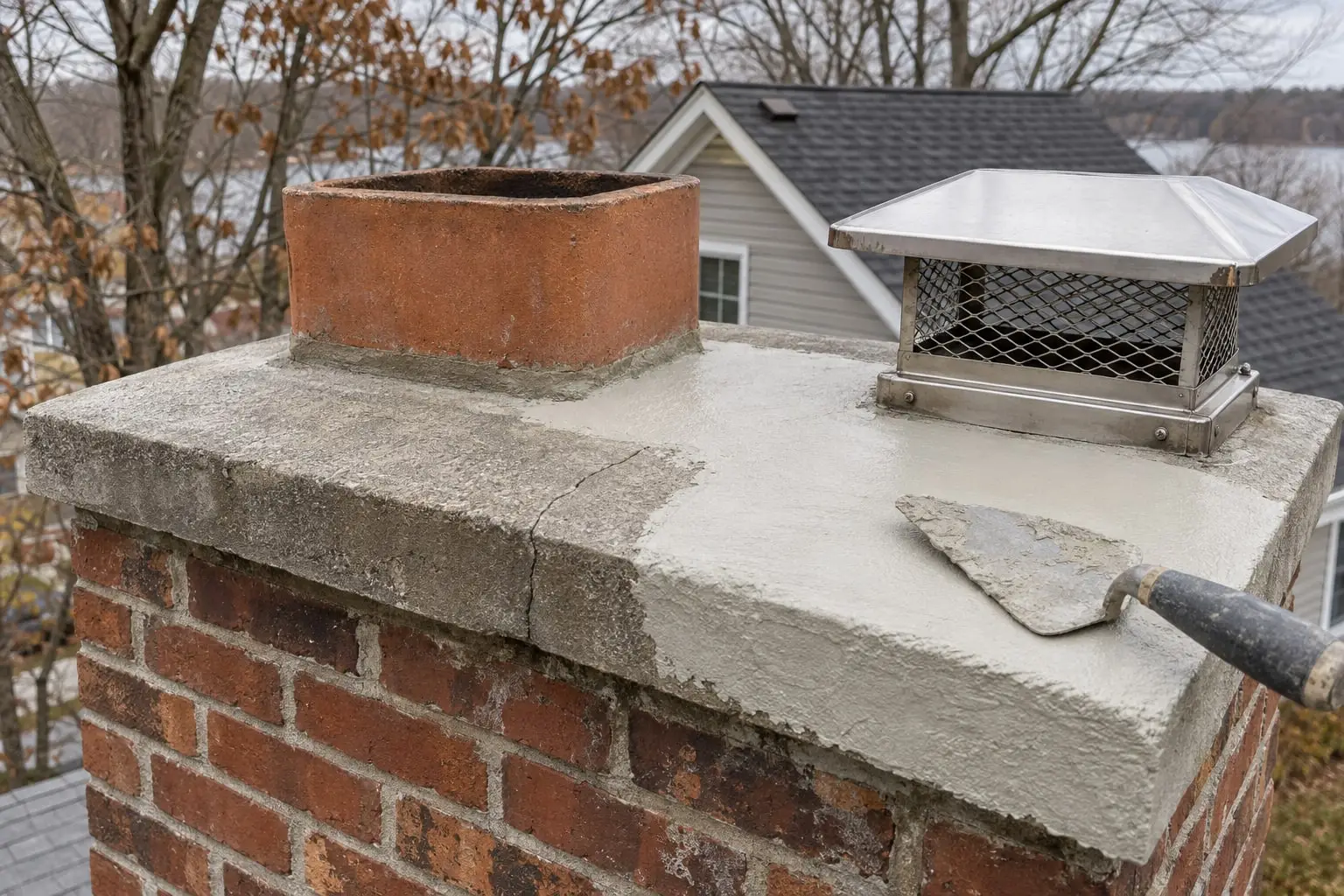
Chimney crown repair
Cracked or crumbling crowns sealed, resurfaced or rebuilt so the brick below stays dry.
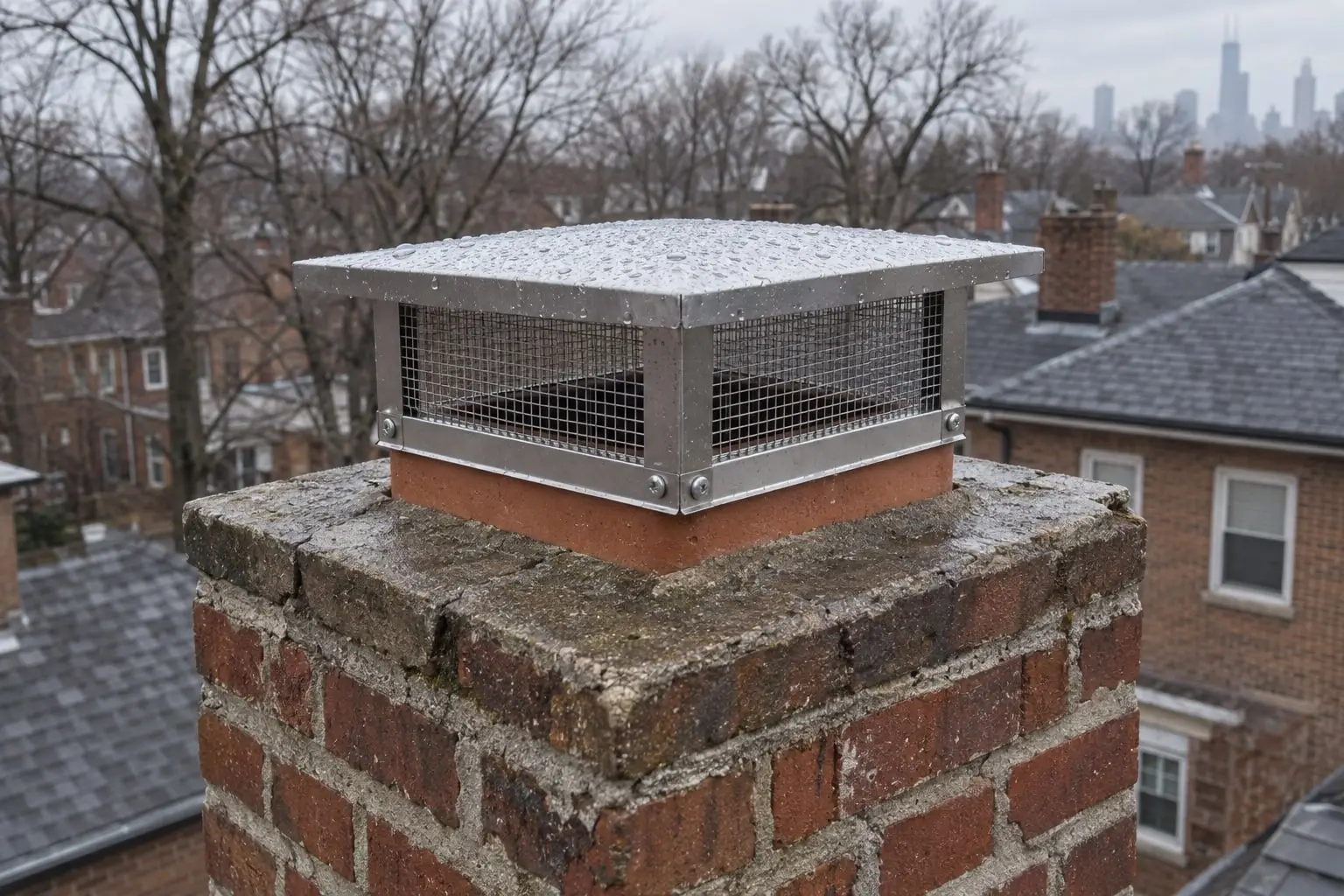
Chimney cap services
Caps and lids fitted, replaced or repaired to keep rain, leaves and animals out of the flue.
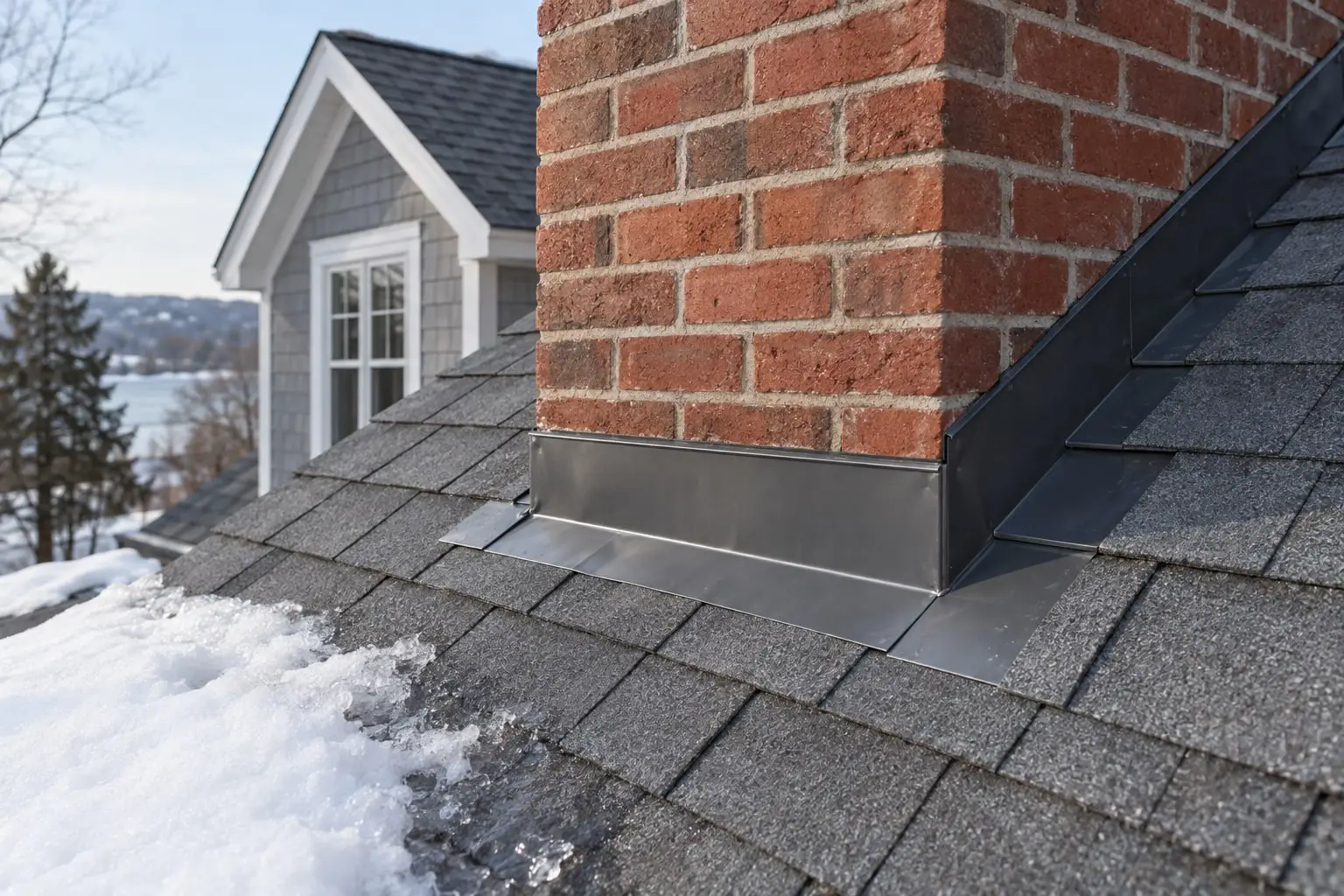
Chimney flashing repair
Flashing at the roof line replaced or resealed, to stop leaks where the chimney meets the roof.
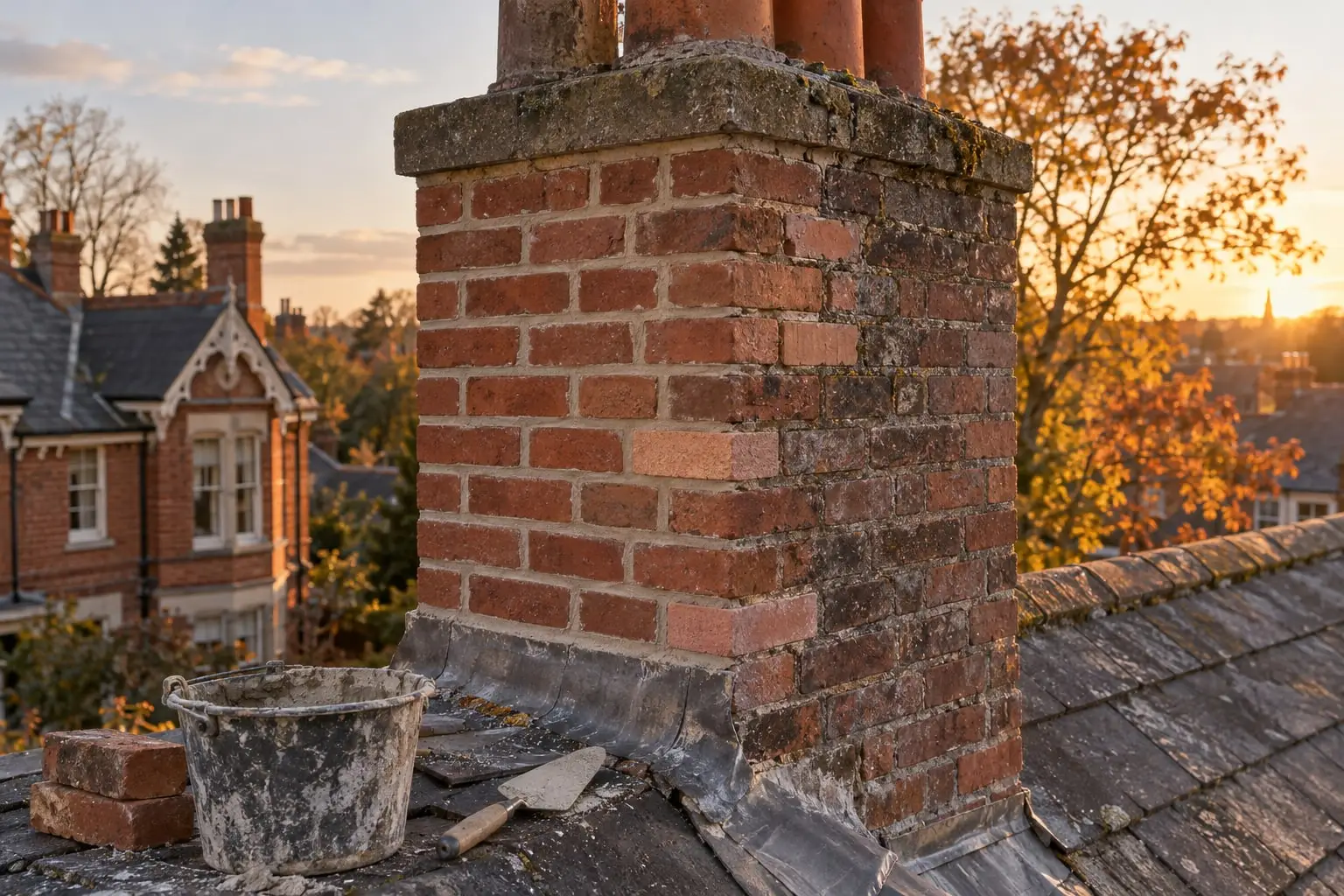
Masonry restoration
Open joints repointed, broken bricks replaced and loose courses rebuilt on older brick chimneys.
Ready to keep the weather out of your chimney?
Fireplace, stove or insert? Tell us which, leave your number, and we call to book a visit.