
Chimney sweep in Oak Park, IL
Every fire leaves soot and creosote on the flue walls. We brush the whole flue clean, from the firebox or stove collar to the cap, and tell you what we see along the way.
- Fireplaces
- Wood stoves and inserts
- Flue and connector pipe
Why a flue needs sweeping, and how often
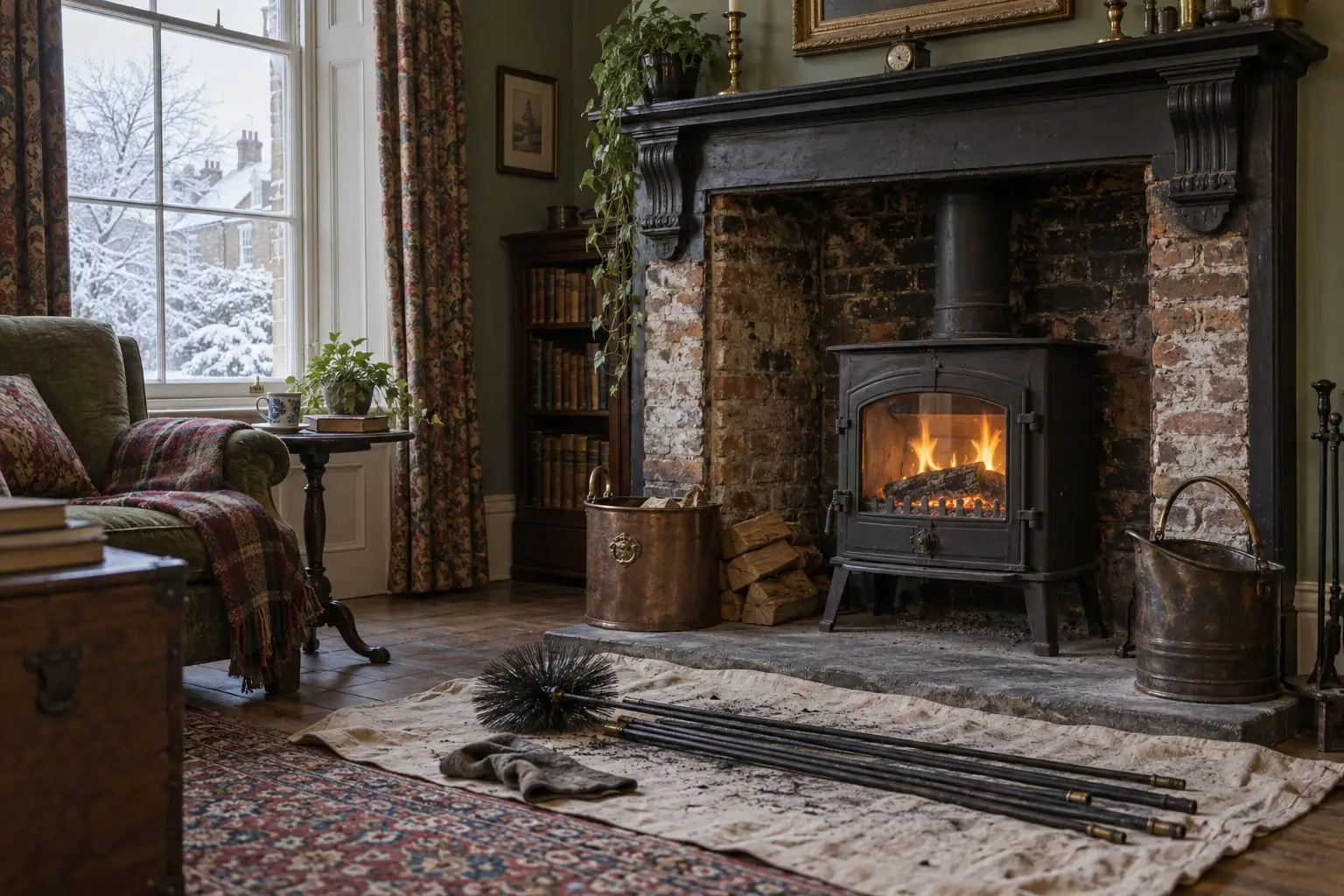
Smoke carries tiny unburned particles, and as it cools in the flue some of them settle as soot and a tarry, flammable film called creosote. The layer builds a little with every fire, narrows the flue and is the fuel of a chimney fire.
For a fireplace or stove you use through the winter, once a year is the usual rhythm. Many Oak Park houses were built with a wood fireplace in the front room, and a lot of them now see only a few fires a season, but even those flues collect soot, nests and fallen mortar over time.
- A fireplace you light often through the cold months
- A wood stove or insert used as a heat source
- A fireplace you have not lit in years and want to use again
- A new home with a fireplace nobody has checked
- A smoky smell in the room, even without a fire
What you get with Chimney sweep
Less fuel for a chimney fire
Brushing out the creosote takes away the material a chimney fire burns, which is the main reason to sweep.
A flue that draws properly
A clear flue lets smoke leave quickly, so the fire burns cleaner and the room stays free of smoke.
A look at the whole system
While the brushes are in the flue we see the state of the liner, the damper and the top of the chimney.
Neat in your living room
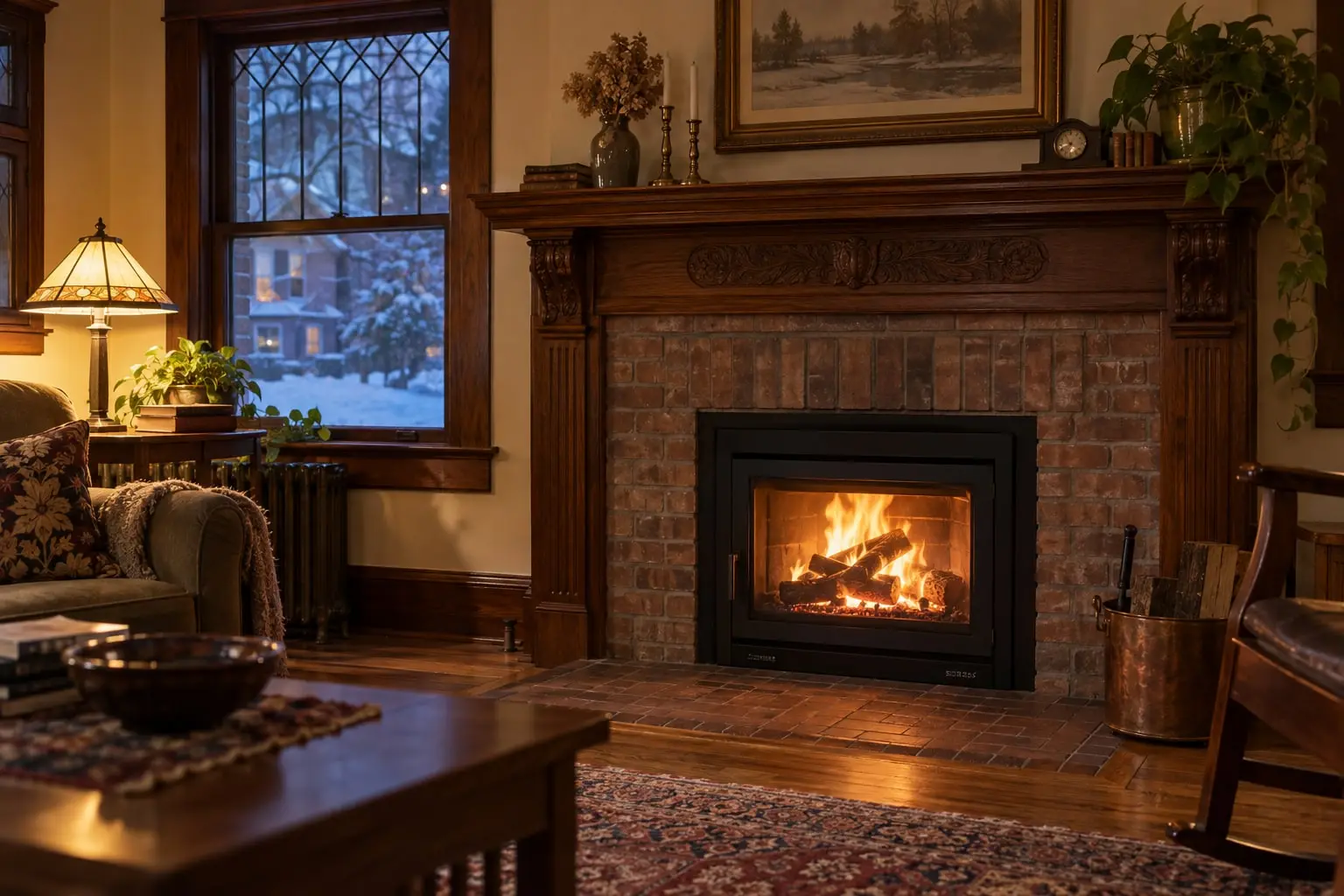
Drop cloths go down around the hearth before any brushing starts.
What a sweep covers
The sweep is the yearly service for a chimney that works. It is not a repair, and if we see something that needs one, we tell you and leave the decision to you.
- The flue, brushed from top to bottom
- The smoke chamber and the smoke shelf above the damper
- The firebox and the damper
- The stovepipe or connector on a stove or insert
- A look at the cap and the crown from the roof
Open fireplaces, stoves and inserts
An open fireplace sends its smoke straight up a wide flue. A stove or an insert sends it through a narrower pipe, which fills with soot faster because the smoke is cooler and slower. That is why a stove that is used a lot can need a sweep sooner than the open fireplace beside it.
Chimney sweep questions
How do I know my chimney needs sweeping?
A smoky smell in the room, soot falling into the firebox, a fire that is slow to catch or a stove glass that blackens fast are all signs. If it has been a year of regular fires since the last sweep, it is time, whatever the signs say.
Do I need a sweep if I rarely use the fireplace?
Often yes. A flue that sits unused still collects fallen mortar, leaves, nests and old soot, and a first fire after years can push that debris into the room. A sweep before the first fire of the season keeps it simple.
Will you cover my floor and furniture?
Yes. We lay drop cloths around the hearth before we start, and the brushing happens inside the flue, so most of the soot stays in the chimney until it is collected.
Is a sweep the same as an inspection?
They overlap but they are not the same. A sweep cleans the flue. An inspection is a closer look at the condition of the whole system. We can look things over while sweeping, and we can book an inspection on its own if you want a full report on a chimney.
Other services we provide
Chimney cleaning
Heavy buildup, nests and debris cleared from the flue, the smoke chamber and the firebox.
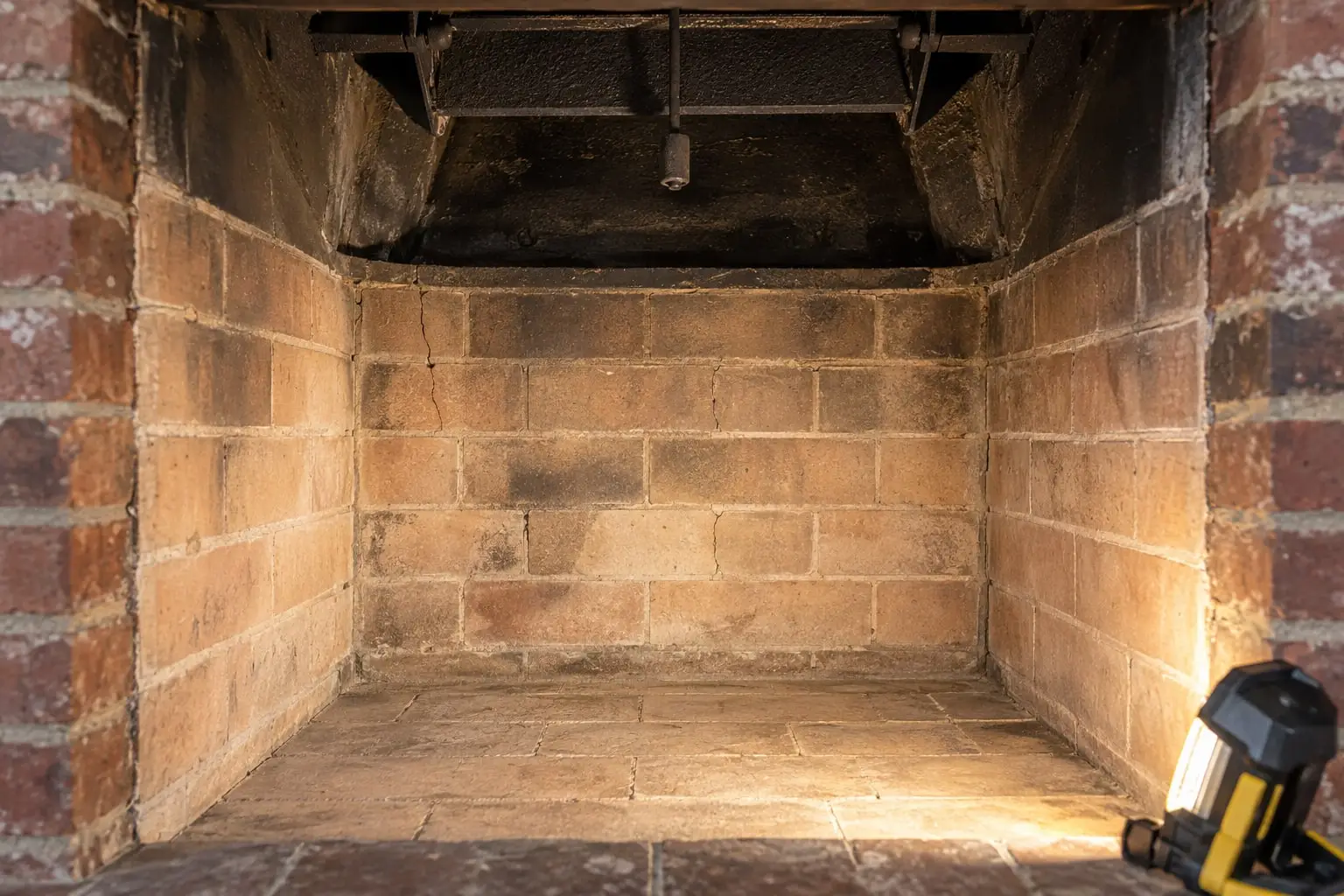
Chimney inspection
A close look at the firebox, flue and top of the chimney, with a plain account of what we find.
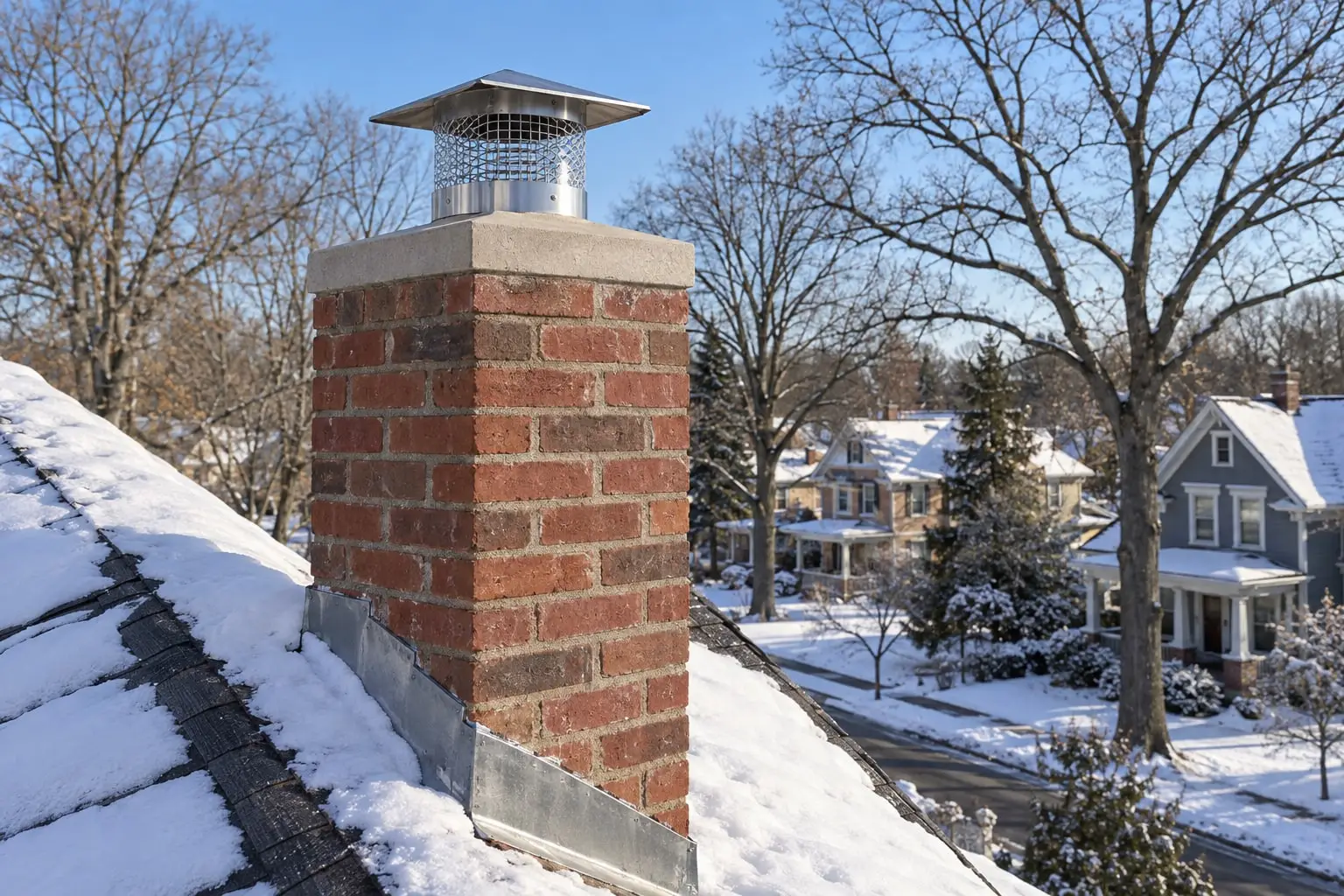
Chimney repair
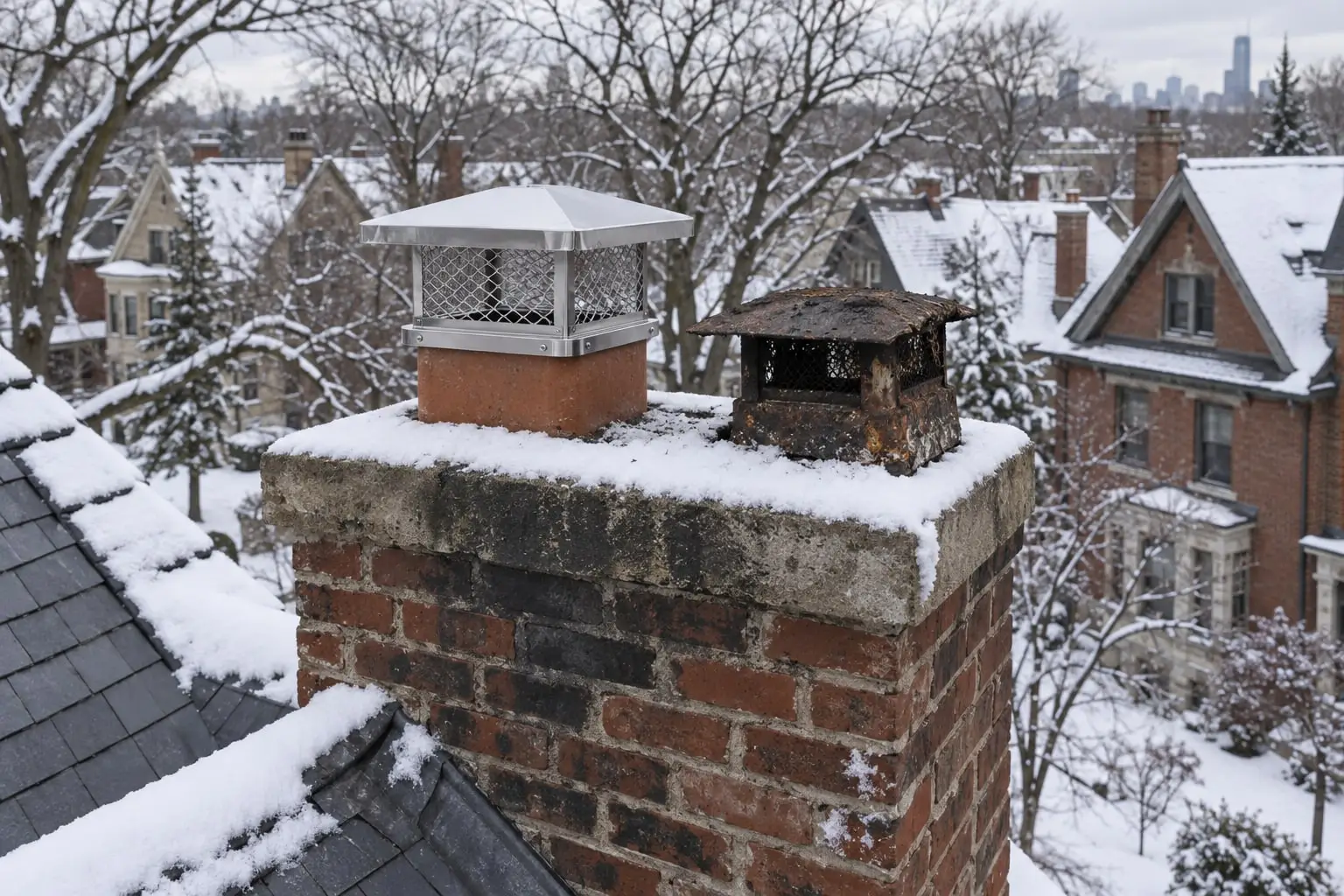
We repair caps, flue pipes, crowns, flashing and brick so that rain and frost cannot get into the chimney.
Ready to book your chimney sweep?
Fireplace, stove or insert? Tell us which, leave your number, and we call to book a visit.